




How can you plan for servomotor obsolescence?
A servomotor can be working perfectly while already being obsolete or approaching obsolescence.
Over time, certain motor models are gradually withdrawn from manufacturers’ catalogues. Availability decreases, lead times increase, and replacing them with a newer generation is not always straightforward because of compatibility with the existing machine.
Discovering this only after a failure can mean an urgent search, additional costs or prolonged machine downtime.
- Servomotors still on the market
- Motor models approaching obsolescence
- Motor models that are no longer on the market
- Their availability on the market
- Available new-motor solutions
- Options for RecQ-certified reconditioned servomotors
- Service exchange options
- Motor models requiring a specific availability strategy
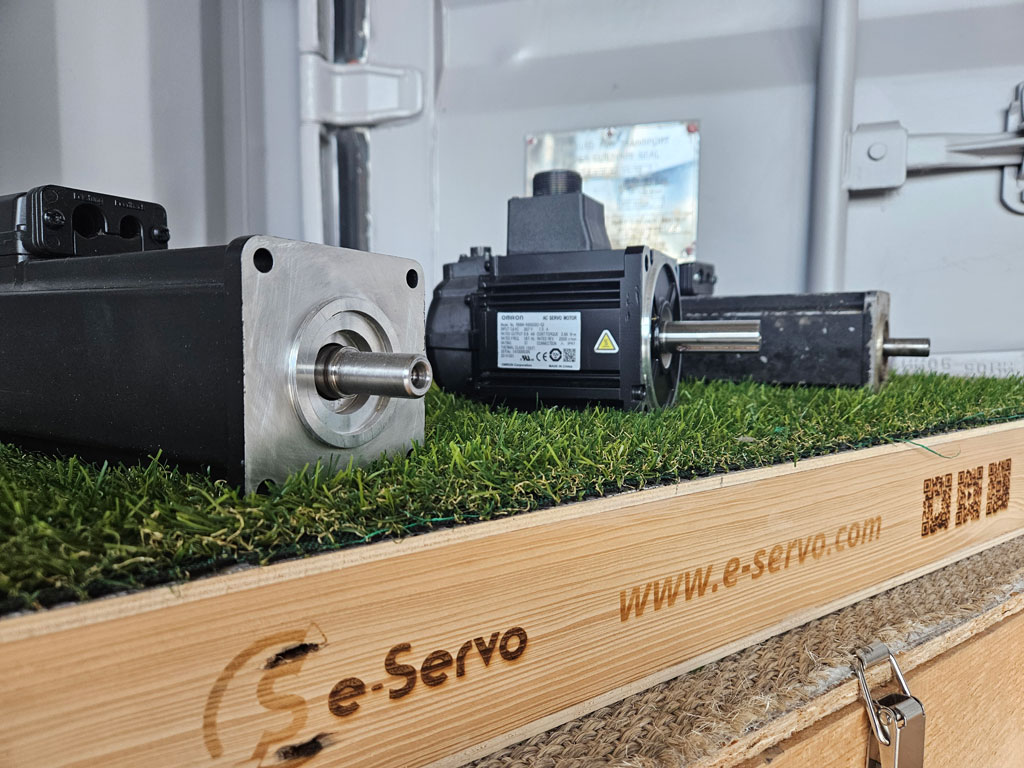
E-Servo works with the leading industrial servomotor brands : Siemens, Bosch Rexroth / Indramat, Schneider Electric / Elau, Yaskawa, Mitsubishi, Omron, Allen-Bradley, SEW, Lenze, Control Techniques / Leroy-Somer, Parker / Parvex and many other manufacturers.
Do you really need to stock a spare for every servomotor ?
Safeguarding production does not necessarily mean filling your storeroom with spare parts.
A servomotor that is readily available from its manufacturer and has a low failure rate does not carry the same level of risk as an obsolete model that is difficult to find and installed on a critical machine.
Conversely, having no solution for a servomotor whose failure could stop a production line for several weeks represents a significant risk.
Our analysis therefore determines the appropriate level of availability protection for each motor model.
Availability x Obsolescence x Failure rate x Machine criticality
This analysis limits unnecessary stock while safeguarding the availability of motor models that are truly strategic for your production.
Our MCO approach in 5 steps
Defining your requirements
Together, we define the scope of the study.
The analysis can cover a strategic machine, a production line, a workshop or an entire industrial site.
This first step also identifies your constraints: the desired service life of your installations, equipment criticality, your current stock management arrangements and any issues already encountered.
On-site audit
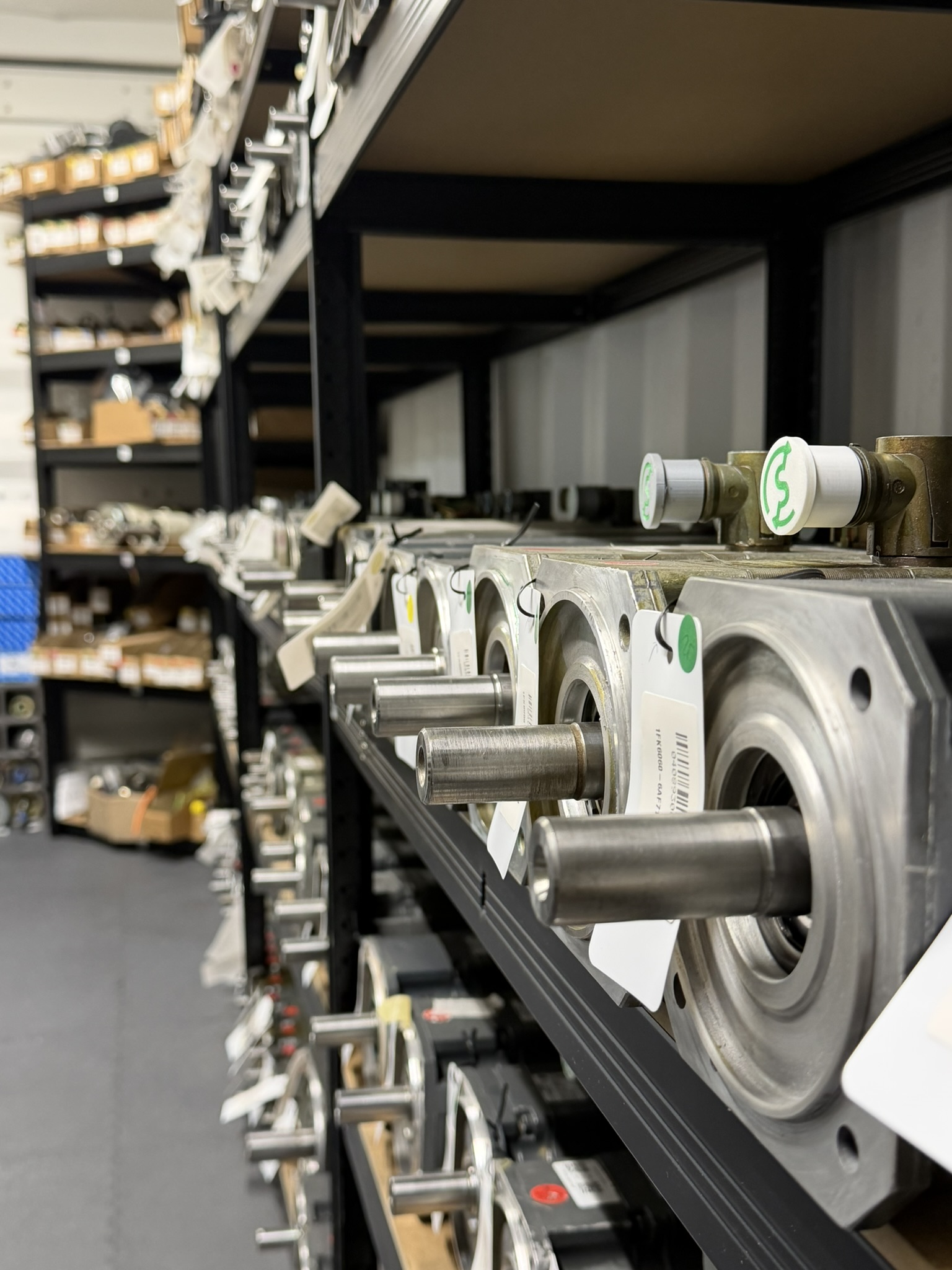
E-Servo inventories the servomotors fitted to the equipment within the agreed scope.
We record the motor part numbers and the necessary specifications to build an accurate map of the installed fleet.
The aim is simple: to know exactly which servomotors are fitted to your machines before you need to find them in an emergency.
Audit report and obsolescence analysis
Following the audit, E-Servo produces a report listing the servomotors identified.
- Each motor model is analysed to establish, in particular ;
- The manufacturer and product range ;
- Its commercial status ;
- Its level of obsolescence ;
- Its current availability ;
- Any applicable supply lead times ;
- Possible new-motor solutions ;
- Available RecQ-certified reconditioned solutions ;
- Service exchange options
The report provides an overall view of the fleet’s status and highlights the first motor models presenting a risk.
The report provides an overall view of the fleet’s status and highlights the first motor models presenting a risk.
Criticality, failure rate and stock requirements analysis
Not every obsolete motor model needs to be held in stock.
We combine the technical information from the audit with your knowledge of your production equipment:
Which machine uses this servomotor?
Can the machine operate without it?
Are there several identical motors on site?
What is its failure history?
What would be the impact of it being unavailable for several days or weeks?
Is a replacement solution readily available?
This analysis ranks motor models by risk level and determines which genuinely require an availability solution.
Proposal and implementation of the MCO service agreement
Based on the audit and criticality analysis, E-Servo develops a proposal tailored to your fleet.
Depending on the motor models identified, several solutions can be combined :
supply of new servomotors;
RecQ-certified reconditioned servomotors;
service exchange;
creation of a strategic stock;
safeguarding the availability of obsolete motor models;
planning for future obsolescence.
The agreement defines the equipment covered and the solutions needed to guarantee its availability over the agreed period.
An MCO commitment for 5 or 10 years
Once the scope has been agreed, E-Servo implements the MCO service agreement for long-term operational support over a period of 5 or 10 years.
The aim is to turn an unpredictable problem, the failure of a critical servomotor, into an identified risk that has been planned for.
You therefore have a predefined strategy for the servomotors essential to the operation of your production equipment.
Plan today for the servomotors you may need tomorrow.
5years
10years
Why implement an MCO strategy ?
Safeguard your production without building up unnecessary stock.
Identify the servomotors in your fleet.
Detect motor models that are obsolete or approaching obsolescence.
Identify equipment that is truly critical to production.
Optimise your spare servomotor stock.
Plan for failures and supply difficulties.
Safeguard servomotor availability for 5 or 10 years.
MCO, obsolescence and servomotor management
MCO, or long-term operational support, covers the actions needed to keep equipment available and operational over time, particularly when certain parts become difficult to source or obsolete.
At E-Servo, this approach focuses on industrial servomotors.
The servomotor’s exact part number identifies its product range, commercial status and the solutions still available.
During an MCO audit, E-Servo analyses every motor model in the fleet to identify those that are obsolete or may become so.
Depending on the motor model, several solutions may be considered: remaining stocks of new motors, RecQ-certified reconditioned servomotors, service exchange, creation of a strategic stock or sourcing another solution to keep the installation operational over the long term.
The decision does not depend on obsolescence alone.
E-Servo also considers the servomotor’s availability, failure rate, supply lead time and the criticality of the machine it is installed on.
The aim is to safeguard the availability of genuinely critical motor models without tying up unnecessary stock.
E-Servo offers MCO service agreements for long-term operational support with a commitment of 5 or 10 years, tailored to the fleet and the needs of the industrial site.