


On many industrial servo motors, the brake plays an essential role in holding an axis in position when the motor is stopped and helping prevent unintended movement.
However, when a brake develops a fault, the symptoms can be difficult to interpret : a blocked axis, a motor that refuses to rotate, loss of position holding…
In this article, we explain how a servo motor brake works, the most common faults, how to identify them and what solutions are available to restore normal operation.
What Is a Servo Motor Brake ?
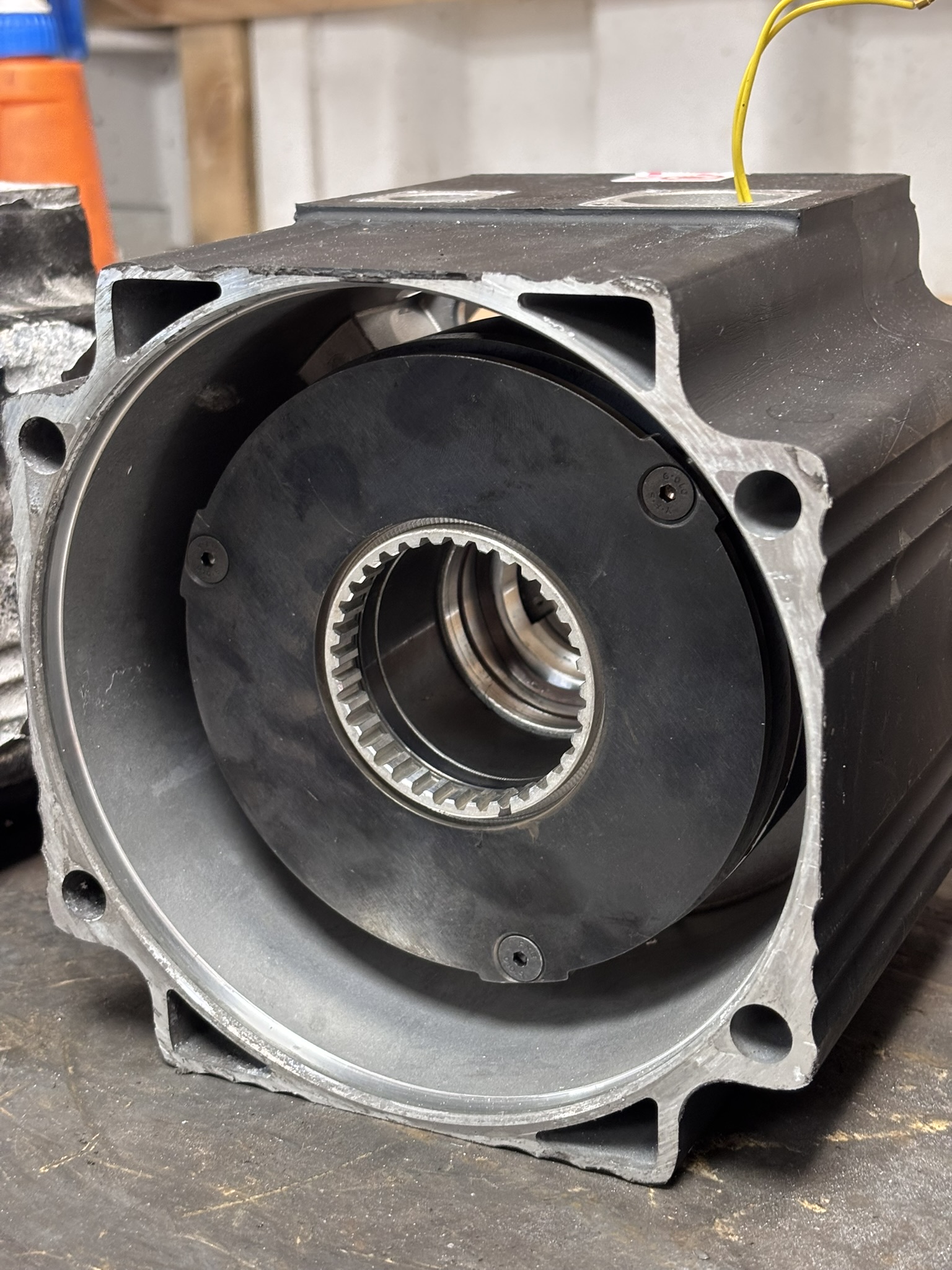
A servo motor brake is typically an electromagnetic holding brake integrated into the motor.
Its main purpose is to hold the motor shaft in position when the brake is not electrically powered.
It is mainly used:
- On vertical axes to help prevent a load from dropping.
- On machines requiring precise position holding.
- In applications where position must be maintained following an emergency stop or power failure, subject to the brake’s specifications.
How Does a Servo Motor Brake Work?
In a typical spring-applied brake, springs apply pressure to the friction disc when the brake is not powered, keeping the motor shaft stationary. When the brake coil is energised, the resulting magnetic field releases the braking mechanism, allowing the motor shaft to rotate.
Want to see how it works in more detail?
We’ve created a video explaining how a servo motor brake works, step by step.
What Are the Most Common Servo Motor Brake Faults?
Although servo motor brakes are designed for long-term use, several types of faults can occur. Identifying the symptoms can help save valuable time during troubleshooting.
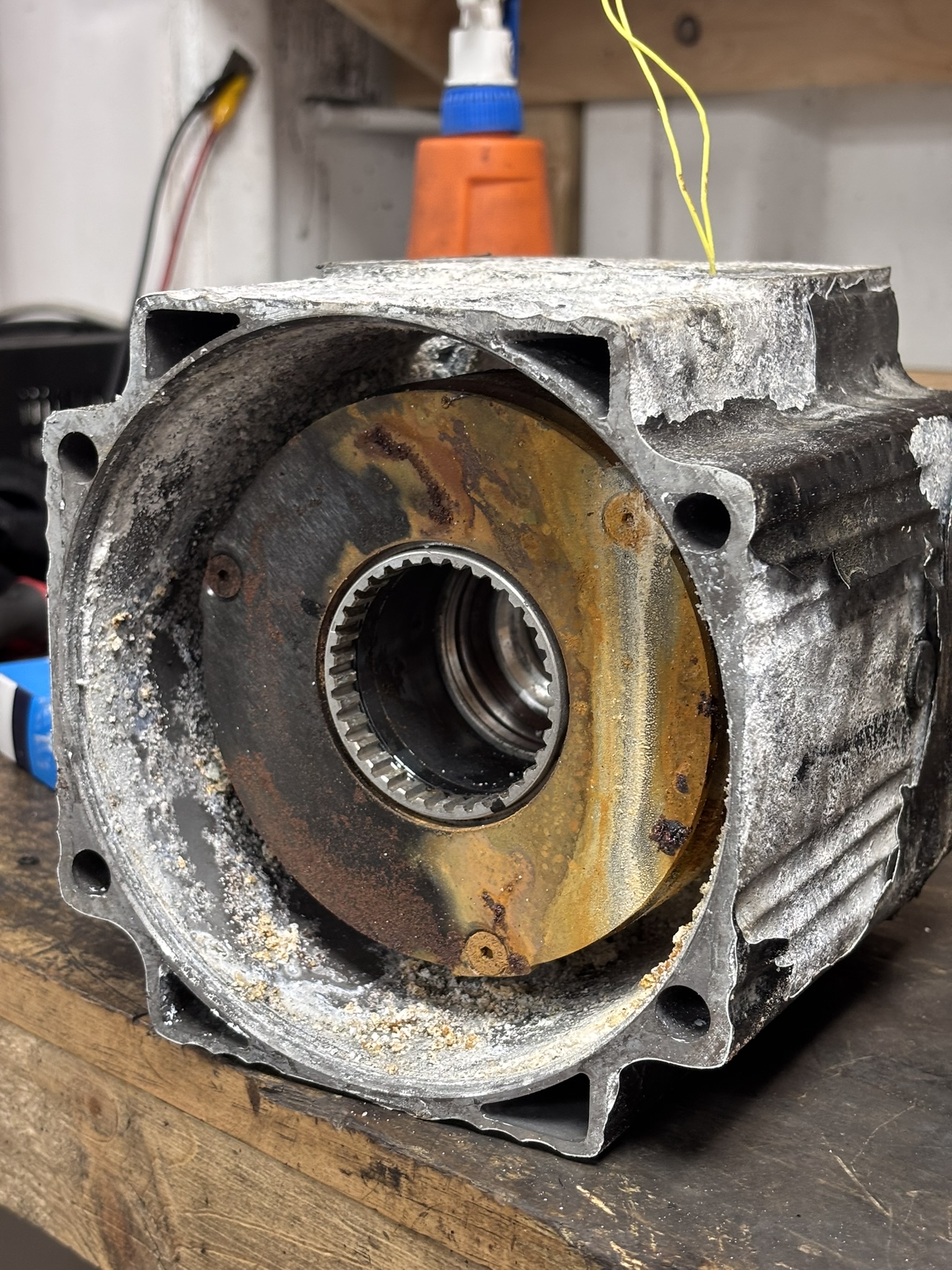
The Brake Slips
The brake appears to operate, but it no longer holds the axis securely when the servo motor is stopped.
Possible causes:
- Contamination (oil, grease, dust or other contaminants).
- Wear of the friction surfaces.
2. The Brake Fails to Release
The motor remains blocked even though the machine is commanding it to rotate.
Possible causes:
- Wear of the braking mechanism.
- Burnt-out brake coil.
3. The Brake Fails to Re-engage
The motor operates normally, but when the brake power supply is switched off, the brake no longer holds the axis correctly.
Possible causes:
- Significant brake wear.
- Demagnetised permanent magnets (on brake designs that use permanent magnets).
How to Test a Servo Motor Brake
There is no single testing procedure that applies to every servo motor brake.
The appropriate method depends on several factors, including:
- The brake model.
- The manufacturer (Siemens, Schneider, Bosch Rexroth, Yaskawa, etc.).
- The application in which the brake is installed.
- Other technical characteristics of the system.
This is why a reliable diagnosis requires an assessment of the entire system, rather than the brake alone.
👉 Not sure whether your servo motor brake is working correctly?
Our team can carry out a diagnosis to identify the cause of the fault and recommend the most suitable solution.
Don’t hesitate to contact us! 😉
These articles may interest you...
Siemens announces the phase-out of SIMOTICS S-1FK7 Generation 2 servomotors
Siemens has announced the phase-out of part of its SIMOTICS S-1FK7 Generation 2 servomotor range, starting on October 1, 2026. This announcement…

What is a refurbished Brushless Servomotor ?
A refurbished brushless servomotor is an industrial servo motor that has been disassembled, inspected and restored in a specialist workshop before…